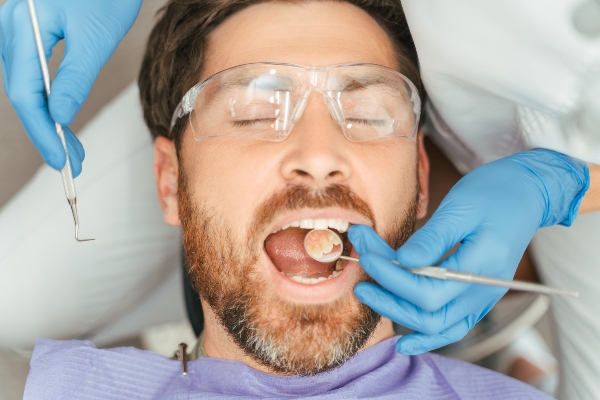
 Dental cleanings are a preventative tool general dentists use to promote optimal oral health. These services are integral in preventing many issues. Still, decay and disease are the two most prevalent dental conditions in the United States. While different, these conditions can trigger one another and have a domino effect, triggering other conditions.
The impact of decay
While many are aware that decay can cause damage, they may fail to realize its true impact on the entire mouth. Decay eats away at each of the tooth's external and internal tissues, which are as follows:
- Enamel. Hard, outer layer.
- Dentin. Just underneath the enamel and is a bit softer.
- Cementum. Covering for the tooth root.
- Pulp. The innermost chamber that houses connective tissue and nerves.
The longer a patient allows decay to remain, the more damage it can do. Beyond altering the appearance of a tooth, it can irreversibly destroy each layer. As each layer is exposed or compromised, patients can experience sensitivity and pain. These symptoms can start when only eating or drinking something too cold or hot, but can quickly turn into a chronic pain that is hard to ignore throughout the day and night.
Further, fractures are more probable once any portion of the tooth's structure weakens. Regardless of whether fractures are present, the general dentist may need to extract the tooth if decay completely takes over most or all of it. Extraction may also be necessary due to bacteria within decay reaching the gums, causing infection or disease.
The impact of disease
According to the Centers for Disease Control and Prevention, or CDC, over 47 percent of adults 30 years old and up in the United States have one of the three stages of gum disease:
- Gingivitis. An early and easily reversible stage that causes slight inflammation and sensitivity
- Periodontitis. An advanced stage that causes chronic bad breath, bleeding, and deterioration of tissues
- Trench mouth. A severe stage that causes tooth loss, ulcers, pain, and severe discoloration
Gum disease can ravage the soft tissues of the mouth and damage the underlying jawbone. When it reaches the jawbone, deterioration occurs, resulting in facial deformities and difficulties holding teeth or replacement options. Fortunately, gum disease is preventable with biannual dental cleanings.
The power of regular dental cleanings
Decay and gum disease primarily result from poor oral hygiene. When plaque, a sticky film of bacteria, is allowed to sit in the mouth, it can turn into tartar. That is why dentists suggest brushing twice daily, flossing at least once daily, cleaning the tongue, and using an antibacterial mouthwash. Following these practices can be considered a security blanket for patients' oral health.
During biannual dental cleanings, the dentist uses various tools to completely remove all traces of plaque and tartar. The patient cannot remove the latter at home due to the calcification process. They will take time to clean above the gumline and, if necessary, dip below it and clean the tooth roots—a professional deep cleaning.
Dental cleanings also allow the dentist to check for abnormalities and general areas of improvement. This allows the dentist to help patients safeguard their oral health by optimizing their routines and services.
Ensure your oral health is in good standing
Dental cleanings are integral in preserving every tissue in your mouth and the underlying jawbones. If it is time for your next checkup or you have oral health concerns, contact our office. We can schedule a consultation to ensure your oral health is in good standing.
Request an appointment or call Eicon Dental Care at 480-422-4368 for an appointment in our Tempe office.
Related Posts
Maintaining good oral health is more than brushing and flossing every day. Regular dental cleanings are essential in keeping teeth and gums healthy. Skipping these appointments can lead to plaque and tartar build-up, cavities, gum disease, and other oral health issues.Dental cleanings prevent the build-up of plaque and tartar. Plaque is a sticky film of…
There is nothing like the feeling of a clean smile after a dental cleaning. However, these routine visits are not enough to maintain your oral health. Between dental cleanings, your daily oral hygiene is essential to protect your oral health. By incorporating the following five practices into your routine, you can keep your teeth strong,…
Wondering whether you really need to go to the dentist for dental cleanings? Read on to learn more. Caring for your teeth and keeping them healthy takes work and dedication. Your smile will look and feel great after a dental cleaning. However, while visiting a dentist for dental cleaning is important, you should also maintain…